Patterns in Transaction Options Supporting Interactive Table Games From Key Developers on Regional Digital Platforms
Kirjoittanut Sam Wolf · 26.8.2026
Patterns in Transaction Options Supporting Interactive Table Games From Key Developers on Regional Digital Platforms
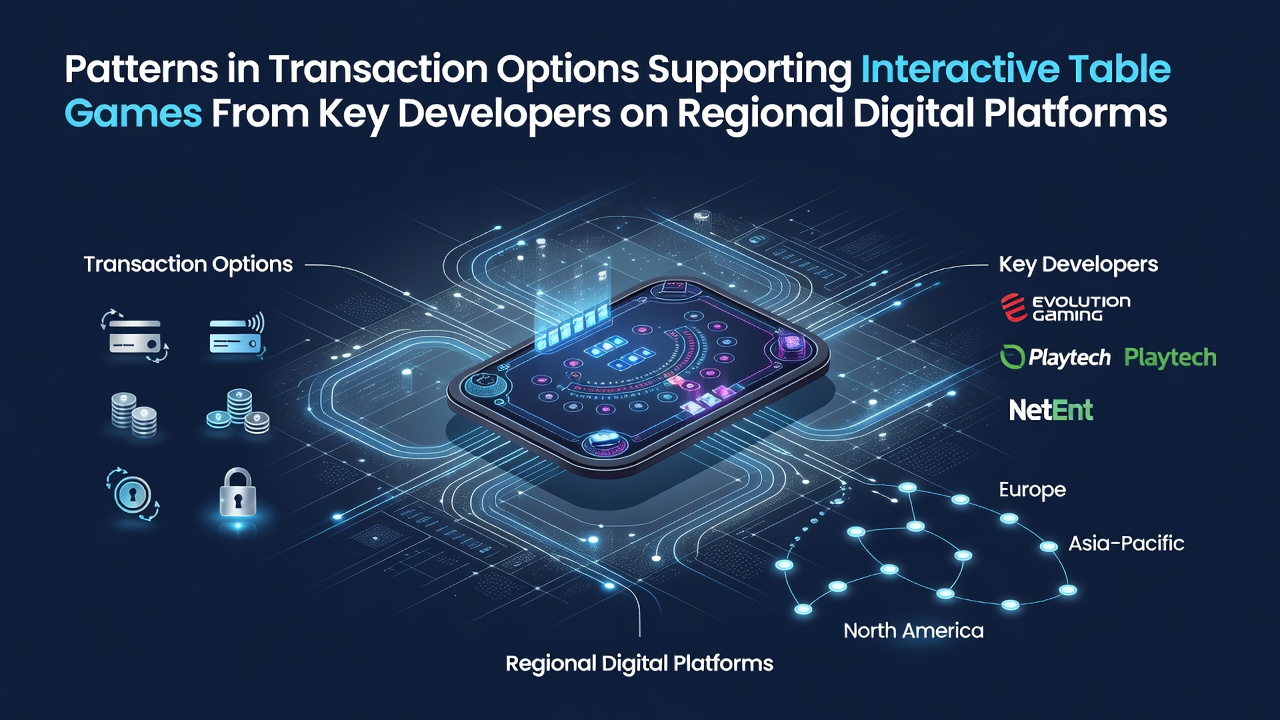
Developers such as Evolution Gaming, Playtech, and NetEnt have integrated transaction systems that align with regional payment preferences while meeting regulatory requirements across digital platforms, and these patterns have become more pronounced by August 2026 as live dealer table games expanded in markets including Europe, Asia-Pacific, and North America.
Transaction options for interactive table games typically include bank transfers, e-wallets, prepaid cards, and in some regions cryptocurrency gateways, with each method reflecting local infrastructure and compliance standards rather than uniform global approaches.
Regional Variations in Payment Integration
European platforms often prioritize direct bank links and regulated e-wallet services because directives emphasize consumer protection and traceability, whereas platforms serving Asia-Pacific markets frequently incorporate local digital wallets and instant transfer services to accommodate higher mobile usage rates. North American operators, particularly those licensed in provinces like Ontario, show increasing adoption of prepaid voucher systems alongside traditional banking methods as regulatory frameworks matured after 2023.
Key developers embed these options through modular APIs that allow regional operators to select compliant providers without rebuilding core game engines, and this flexibility supports table games such as blackjack, roulette, and baccarat where real-time wagering demands seamless deposits and withdrawals.
Developer-Specific Transaction Patterns
Evolution Gaming platforms demonstrate consistent support for instant e-wallet payouts in jurisdictions where speed aligns with player session lengths, while Playtech systems more commonly route transactions through aggregated payment processors that handle multi-currency conversions for table game stakes. NetEnt integrations frequently appear alongside prepaid card solutions in markets with strict deposit limits, creating observable patterns where transaction volumes peak during evening hours across time zones.
Data from industry reports indicates that by August 2026 these patterns stabilized around hybrid models combining traditional banking rails with emerging digital asset options in select regions, although adoption rates vary sharply by licensing authority.

Regulatory Influences on Transaction Flows
Compliance requirements drive much of the observed structure, as operators must verify player identities before processing larger table game wagers, and this verification step often determines which payment rails activate first. Australian regulatory bodies have documented shifts toward account-to-account transfers in recent years, while Canadian provincial frameworks encourage integration with government-approved payment gateways to reduce fraud exposure.
Observers note that developers adjust their transaction modules in response to these rules, resulting in platform-specific menus that list only locally authorized methods at any given time.
Emerging Trends Through Mid-2026
Studies from research institutions such as those affiliated with the University of Nevada highlight rising use of token-based systems in interactive table environments, where micro-transactions during live sessions require low-latency processing. European Gaming and Betting Association reports further show that platforms supporting multiple developer titles tend to standardize transaction interfaces to reduce player friction across different game providers.
Meanwhile, platforms in emerging markets experiment with QR-code linked transfers that tie directly into regional banking apps, creating additional patterns visible in transaction logs from table game sessions.
Conclusion
Patterns in transaction options for interactive table games continue to reflect the interplay between developer capabilities, regional regulations, and infrastructure availability, with data through August 2026 confirming ongoing adaptation rather than convergence toward single solutions. These configurations support the operational needs of live dealer environments while maintaining compliance across diverse digital platforms.